
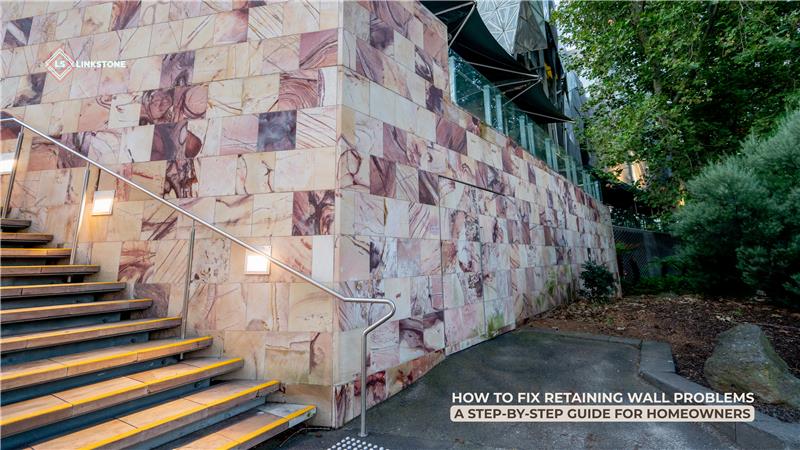
How to Fix Retaining Wall Problems: A Step-by-Step Guide for Homeowners
Retaining walls that lean get 15-20% worse each year without treatment. Quick action to fix retaining wall problems becomes significant for every homeowner.
Your retaining wall boosts your property’s looks and provides vital structural support for your landscape when properly maintained. The structure faces several problems that need attention. Signs of damage show up as bulging and cracking in both concrete and timber sleeper walls. Poor drainage leads most retaining wall failures.
The Federal Highway Administration points to drainage and soil instability as the main reasons retaining walls fail. Professional assessment becomes necessary when your wall leans more than 2 inches, with costs ranging between $150-300. Minor drainage repairs might be something you can tackle yourself for $500-1,500.
This complete guide shows you how to spot common retaining wall issues and inspect them before repairs. You’ll learn DIY fixes for small problems and solutions for bigger issues like leaning walls. We provide practical, step-by-step solutions for water damage and failing structure reinforcement.
Identifying Common Retaining Wall Problems
You can save thousands in repairs by spotting retaining wall problems early. These warning signs help you tackle issues before they turn into major structural failures.
Cracks, bulges, and leaning walls
A visual inspection shows the most obvious signs of retaining wall damage. Horizontal cracks signal excessive pressure behind the wall and pose more serious threats than vertical ones. Your wall tilting to one side usually points to inadequate support during construction or poor drainage that causes pressure buildup.
The wall’s strength gets overwhelmed when sections start bulging or bowing. This biggest problem shows up at the middle or bottom of walls where pressure builds up. Bulging can worsen faster and eventually cause complete failure if left untreated.
Crumbling creates another concern as wall materials and debris pile up at the base. Exposed rebar in concrete walls raises serious alarms because it speeds up deterioration through rust and corrosion.
Signs of water damage and erosion
Water remains the main enemy of retaining walls. Accumulated water behind a wall creates hydrostatic pressure that pushes against the structure. This pressure increases the risk of movement, cracking, or collapse. Your drainage system might be clogged or inadequate if no water flows through the weep holes after rainfall.
Drainage problems show up as pooling water at the wall’s base or persistent dampness. Bare patches, receding soil, or small sinkholes often reveal soil erosion near the foundation. On top of that, it becomes a big deal as it means that saturated backfill puts pressure against the wall beyond what it can handle.
When to worry about structural failure
You should get professional help right away if you see large fractures, separation from the main structure, severe leaning, or much bulging/crumbling, especially at the wall’s base. Sudden sinking of surrounding soil points to changing pressure dynamics that can make your wall unstable.
Trapped water behind walls creates special challenges in colder climates. The water freezes and expands, starting a destructive freeze-thaw cycle that causes progressive damage. Clay soils make things even trickier because they absorb water, swell, and put more sideways pressure on walls.
Note that retaining walls stand among the highest risk elements in geotechnical engineering. Problems range from complete collapse to unacceptable displacement. Early intervention prevents more severe structural damage down the line.
Inspecting the Wall Before Repair
You need a full picture to find why problems happen before starting any retaining wall repairs. This step helps you decide if you can fix things yourself or need to call professionals.
Check foundation and soil conditions
Your wall’s stability depends on its foundation. The soil at the base might show signs of subsidence that demonstrates sudden sinking around the structure. Each soil type reacts differently under pressure. Clay soils have lower internal strengths but stick together better. Sandy soils let water pass faster but may not provide as much support.
Look specifically for:
- Reactive clay soil that expands with moisture and shrinks when dry, making the wall move
- Soil erosion or bare spots near the foundation
- Problems with compaction – too much within 3-4 ft of the wall can rotate it forward
The soil’s bearing capacity usually determines the wall’s design, and changes to this capacity can weaken the structure.
Evaluate drainage and water flow
Bad drainage behind retaining walls leads to most wall failures. Water buildup creates pressure that can double the force against your wall. This pressure pushes structures outward and makes them lean or collapse as time passes.
Check for:
- Water pooling at the wall’s top or base
- Weep holes or drainage pipes that don’t work
- Wet spots near the structure
- The right drainage materials like gravel backfill
A working drainage system needs weep holes, pipes with holes at the bottom, and backfill material that drains well.
Assess wall stability and alignment
A wall that leans means something’s wrong with the structure. Just a few degrees of tilt points to big problems. The wall’s face might show horizontal cracks that usually mean water pressure issues, not normal settling.
A level helps you check alignment at different points. Walls start leaning when they can’t handle the soil’s pressure behind them. The wall’s lower third needs special attention because that’s where pressure builds up most and causes bowing.
Make sure everything meets building codes before repairs begin. Professional inspectors use standards like AS4678 to verify the structure’s safety.
Step-by-Step DIY Fixes for Minor Issues
Homeowners can fix minor retaining wall problems without professional help. The right tools and know-how make these repairs manageable DIY projects.
How to fix a retaining wall with cracks
Concrete repair kits work well for small cracks in retaining walls. Start by making the crack slightly wider with a masonry chisel and hammer, then clear out any loose debris. The area needs a good cleaning before you add fresh mortar or concrete filler. A sponge or toothbrush helps match the texture on rendered walls while the material stays workable.
Replacing damaged blocks or mortar
Damaged stones or blocks need complete removal. Take out the surrounding mortar with a chisel without affecting nearby pieces. A cold chisel helps make precise cuts to get the block out. Clean the space well and add drainage rock at the bottom so water flows properly. Pick replacement blocks that match your wall’s original size, color, and texture. Set them firmly in place with the right mortar or adhesive.
Improving surface drainage with gravel or weep holes
Poor drainage leads to wall failure most often. Weep holes solve this problem – they’re small openings placed regularly near the wall’s base that let water escape. You can add these during construction or drill them through later. Another option is putting a perforated drainage pipe behind the base and covering it with gravel. The best results come from creating a drainage zone behind the wall that runs from bottom to within 0.5m of the top.
Handling Major Repairs and Reinforcement
Retaining walls with major structural problems just need immediate attention. These walls can deteriorate faster when damaged. A leaning wall’s condition worsens by 15-20% each year without repairs.
How to fix a retaining wall that is leaning
Walls that lean less than 2 inches need better drainage with gravel backfill and perforated pipes. You should brace the wall with lumber supports during repairs. The soil behind the wall needs proper compacting in layers to give extra support. Any wall leaning beyond 2 inches needs a professional’s full picture.
Leaning retaining wall repair with anchors or tie-backs
Tieback anchors are a great way to get strong reinforcement by connecting leaning walls to stable ground. Steel cables or rods extend from the wall into solid soil and fight against lateral pressure. Each helical tieback anchor handles up to 200,000 lbs. These anchors work right away without concrete curing time. They also work in any weather and don’t need digging.
How to reinforce a retaining wall with geogrid or steel bars
Geogrids, which are synthetic grid-like polymer materials, boost wall stability by a lot. The load spreads evenly across the structure and makes the soil stronger behind the wall. Steel reinforcement gives another strong option to fix badly damaged walls. Steel bars excel at fighting outward pressure, especially with walls that show serious bowing.
When to call a professional for structural repairs
Your wall needs professional help right away if:
- It leans more than 2 inches from vertical
- You see horizontal cracks longer than 2 feet
- Parts of the wall bulge out noticeably
DIY repairs on badly damaged walls often make things worse. A $4,586 repair job could turn into a $22,934 complete rebuild.
Conclusion
Your retaining wall problems just need quick action. Neglected issues will ruin your property’s looks and can get pricey with structural failures later. A leaning wall typically gets 15-20% worse each year when you ignore it.
Regular checks protect you from major failures. You should check the foundation, look at drainage systems, and test wall stability to find core problems before repairs begin. The ability to spot differences between minor and major issues helps you decide between DIY fixes and calling professionals.
You can fix smaller problems yourself like filling cracks, swapping damaged blocks, or making drainage better with weep holes and gravel. These quick fixes often stop bigger damage from showing up. But walls that lean more than 2 inches or show substantial structural damage need expert help. DIY repairs on badly damaged walls could turn a $4,586 fix into a $22,934 complete rebuild.
Water is your retaining wall’s worst enemy. You should fix drainage problems first, whatever other issues you see. A well-managed drainage system with good weep holes and backfill materials stops hydrostatic pressure that could double the force on your wall.
This piece should help you tackle your retaining wall problems quickly. Quick detection and the right fixes can extend your wall’s life substantially while protecting your landscape and investment.